The MLS All-Star Game is Unfair

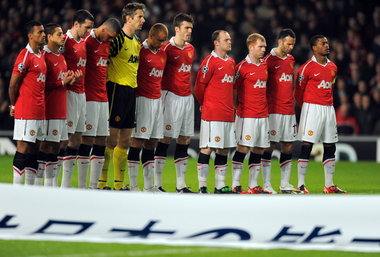
The MLS All-Stars lost to Manchester United 4-0 last night in a scoreline that doesn’t reflect how the game went. The MLS’s stars played well in the first half, sticking with the Red Devils for the full 45 minutes but found themselves down 2-0 at the break. In the second half, United took control and outplayed the MLS, leading to a 4-0 final scoreline.

But my issue isn’t with the final score. Yes, the MLS deserved better, but that’s how soccer – and sports – work. United took their chances very well and the MLS missed a couple of golden opportunities. What is a problem is that this game is seen as a referendum on the state of soccer in America.

The MLS All-Stars get to practice for a couple of days and then are tossed on the field together and expected to compete with the top teams in the world. You can compare individual players at each position around the field and Manchester United will generally have the better players, but the gap is closing.

However, if you just look at the scoreline or even watch the game, you wouldn’t notice that. Many of United’s players have been playing with each other for years and the team has been playing friendlies around the U.S. for the past month. They are in preseason mode, but are finding their form. And they are used to playing with each other.

Rooney and Berbatov play off each other well. The defense holds the backline and communication around the field is significantly greater for the Red Devils. Continue reading “The MLS All-Star Game is Unfair”

More Calls for Instant Replay in Baseball

After last nights 19-inning marathon between the Pirates and Braves ended in a disgraceful manner with home late umpire Jerry Meals calling Julio Lugo safe at the plate on a play that wasn’t remotely close.

There’s no excuse for blowing that call. I really can’t fathom how Meals could miss it. Has there ever been an easier call to make. It really doesn’t make any sense. But it happened so where do we go from here?

Well to instant replay of course.

Instant replay has been discussed in baseball quite a bit over the past few years and is now used for determining home run calls. But it can be expanded.

The system I propose is actually pretty simple. Challenges! Football has them. Tennis has them. They work great, don’t slow the game down much and prevent umpires/officials from determining the outcome of a game.

Give each manager one challenge per game. If he wins the challenge, he keeps it. If he loses it, then he’s done. They cannot be used for overturning strike/ball calls. They can be used for tag plays on the bases, trapping the ball, fair/foul line drives, close plays on the bases, etc.

Most games, managers won’t use them and there won’t be a difference. Every once in a while though, a manager can toss that red beanbag (I like beanbags over flags) onto the field. It’d add a slight bit more strategy (if there’s a close call in the second inning, do you risk using it and losing it?) and will entertain fans.

The umpires on the field can either leave briefly and check it out or a fifth umpire can sit upstairs in a replay booth and make the ruling himself. Or Bud Selig can set up a small group that sits in a room in the MLB Offices in New York and makes the calls for all games.

Any method would be quick, add a bit of entertainment and fix umpires’ mistakes.

Anyone have a reason why this isn’t a good idea?

Credit Where Credit Is Due: The NFL

While I’m not a huge football fan, I’ll still spend nine hours watching every Sunday during the Fall. I feel compelled to watch no matter my feelings on the sport (too many commercials!) so an NFL lockout didn’t seem like the end of the world to me. It basically would have given me my Sundays back. But that won’t be the case for at least the next decade because “football is back”.

That means SportCenter will be dominated by free agency, rule changes, training camps, preseason games and team predictions over the next couple of weeks. Fantasy football commercials will pick up en masse and most major stories on ESPN will relate to the NFL.

I’m not particularly looking forward to ESPN shoving an offseason full of NFL news down my throat in a month, but I do have to give credit NFL commissioner Roger Goodell and NFLPA President DeMaurice Smith.

This was a pretty bitter battle that went back and forth a couple of times and led to the longest lockout in league history. But in the end, they got it done.

Here’s how Ashley Fox at ESPN described the deal:

• The owners and the players. Call it a tie. Each got a little something they wanted, and most important, each will get a lot of money. The owners now will keep 52 percent of the revenues, not the 47 percent from the previous collective bargaining agreement that so rankled them, but they also will have to operate with a $120 million salary cap, with an additional approximately $20 million for benefits, and have a guaranteed spend. That guaranteed spend was important to the players, and they got it.

In the end, the owners and players are splitting more than $9 billion. No one is losing.

That sounds exactly like how this sort of thing is supposed to work. Lots of bickering, months of proposals, counter-proposals and walking away from the table. Bring in the lawyers and the courts and make this thing as messy as possible. But when the season nears, each side sacrificed something and realized missing any games would be unacceptable. The Hall of Fame game is a big enough casualty in itself.

So, props to Goodell, Smith and everyone else involved in these negotiations. They were messy and dragged on but we’re going to have a full season of football and everyone can be happy with that (If only people in Washington could learn how to give a little bit on each side).