Wonkblog’s Lydia DePillis pushed back against Matt Yglesias that Barnes & Nobles is in a failing business. She cites a couple of reasons that the industry’s decline is not inevitable. Here’s a quick summary:
1. Barnes & Noble retail posted a tidy $374 million profit for FY2013 (not last quarter as DePillis writes, but still strong). That’s a rise of 16% compared to 2012.
2. The company runs around 700 college bookstores across the country.
3. Publishers dislike Amazon and may offer B&N discounted prices to fight the online giant.
Let’s pick these apart a bit.
First, about the profit. B&N retail had a solid performance in 2013, but those figures mask the structural problems the company faces. Over the past two years, the firm has closed 30 stores and opened just one new one. At the same time, retail sales have been falling. A couple of things to bear in mind here. Books are a leisure item that people easily cut back on when times are tough. Thus, it’s no surprise to see sales dropping after the recent recession. But the combination of the recent recovery and the closure of B&N’s main competitor (Borders) should have given its revenue a boost. Instead, sales dropped 6% last year. That $374 million profit is not a result of growing revenue, but of closing stores and cutting costs. That’s great for a company, of course, but it masks the realities of the bookstore retail business. Readers are still turning to e-books and Amazon over the regional bookstore. At some point, B&N is only going to be able to cut costs so much. This can be seen in the company’s fourth quarter profit of $51 million, a 24% drop from 2012.
In Barnes & Noble’s college bookstores, there’s more hope for the company, but still major issues. These stores are a lucrative business. Students have to buy textbooks for class and publishers jack up the prices, leaving everyone with a nice profit and students with holes in their wallets. Reading a textbook is unlike reading a normal book. Students take notes, active read and solve problems in the margins. It’s very helpful to have a physical copy of the book and not a digital one. This means that revenues for these stores may stay strong. That’s what we see in the company’s recent filings, where sales from college bookstores rose slightly to $1.643 billion (although that’s still below the FY2011 level). Overall, the firm’s college stores had profits of $111 million, slightly below 2012 levels but that was mostly due to digital investments the company made. The firm has increased its digital textbook footprint and is offering textbook rentals as well. Sounds like a solid business, right? Well, maybe not.
The problem is that the landscape for college bookstores is changing as well. It just hasn’t shown up in the numbers yet. More and more students are turning to online textbook stores or are starting to rent books instead. The National Association of College Stores recently released a report that noted that the college textbook market is basically unchanged since 2006 even while college enrollment has increased nearly 25%. The graph below shows the story:

The monopoly power that textbook stores once had over students is rapidly disappearing. Local bookstores and online retailers have seen the opportunity to undercut school stores and offer students a lower price for the same books. Students, many of whom are on scholarship and are less attentive to textbook prices, are realizing that they can save a lot of money by shopping off-campus. So while the firm posted increased revenue in 2013, don’t expect that to continue. B&N itself expects bookstores sales to decline slightly next year.
As for DePillis’s last point, I don’t know much about it. She offers it as a hypothetical and maybe she’s right. But if the company is relying on publisher’s hatred of Amazon to survive, that’s not a sustainable business model.
This doesn’t mean that the retail bookstore industry is entirely dead. Local stores can certainly survive and prosper as the big retail giants fade away. As DePillis notes, the community franchise model is certainly a possibility for Barnes & Noble. Selling off the failing Nook business, taking the company private, reducing store size and offering a local bookstore with a national supply chain could be a very profitable business. But the end of giant retail bookstores is rapidly approaching. If Barnes & Noble doesn’t want to follow Borders into bankruptcy, it better act fast.
 Obviously, a national referenda isn’t going to happen. But if we did, it would clearly show that the vision most Americans have for their government is not realistic.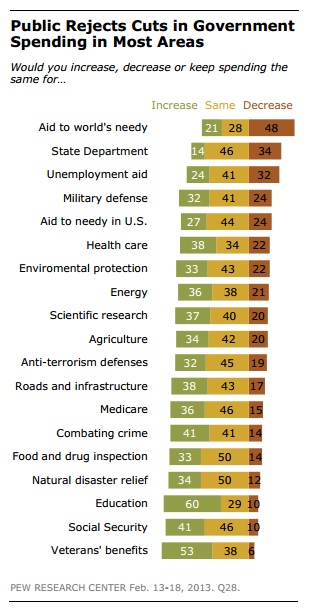


 Danny Vinik