Over the weekend, Raul Labrador appeared on Meet the Press to talk about immigration reform:
In fact, if you look at this Obamacare debacle that they have right now, this administration is actually deciding when and where to actually enforce the law. And that’s what some of us in the House are concerned about. If you give to this administration the authority to decide when they’re going to enforce the law, how they’re going to enforce the law … what’s going to happen is that we’re going to give legalization to 11 million people and Janet Napolitano is going to come to Congress and tell us that the border is already secure and nothing else needs to happen.
Sounds a bit crazy, right? Not really. Republicans have been clamoring for years now about the authoritarian Obama administration. Much of it has been utter bogus, but Labrador has a point here and we can look right back to last week’s delay of the employer mandate to see it.
The employer mandate requires all employers with more than 50 workers to offer affordable health insurance or pay a $2,000 fine. Implementing this policy has proven difficult so the White House announced last week that it was delaying the employer mandate until 2015. Except the Obama Administration doesn’t have the ability to do that. Congress does. Instead, the Administration told the IRS to not enforce the $2,000 fine for a year. That’s not how the government is supposed to work. Here’s Ezra Klein last week:
This is a regulatory end-run of the legislative process. The law says the mandate goes into effect in 2014, but the administration has decided to give it until 2015 by simply refusing to enforce the penalties.
The administration says this kind of thing happens all the time. “I think you’d be harder pressed to find some example where there wasn’t some discretion on how to implement major policies than one where everything went exactly by the books,” says one senior administration official involved in implementation.
Be that as it may, the regulatory solution reflects the fact that the legislative process around the health-care law is completely broken. Republicans won’t pass any legislation that makes the law work better. Improving the law, they fear, will weaken the arguments for repeal. But Democrats, of course, won’t permit repeal. So Congress is at a standstill, with no viable process for reforming or repairing the Affordable Care Act as problems arise. And so the White House is acting on its own.
If the President had come out and asked Congress to pass a bill delaying the employer mandate for a year, do you think legislators would have obliged? I’m not sure. Republicans would be up in arms screaming for repeal again. Would they agree to the delay? I don’t know. But even if they hadn’t, the White House would have at least tried to adjust the law legally and not used its own authority. Instead, it circumvented Congress without even trying to adjust it legally.
That’s exactly what Labrador feels could happen with immigration reform. The immigration bill that passed the Senate does not have any hard triggers so Secretary of Homeland Security Janet Napolitano wouldn’t actually have to tell Congress the border is secure before illegal immigrants could apply for citizenship. But in any bill that passes the House, hard triggers will almost certainly be part of it and would require such testimony from Napolitano.
Why are Democrats so against hard triggers? They fear that a future Republican Secretary of Homeland Security will never declare the border secure to prevent illegal immigrants from receiving citizenship. Labrador has the exact same fear: that a future Democratic Secretary of Homeland Security will definitely declare the border secure, even if it isn’t, to allow illegal immigrants to apply for citizenship. Republicans favor hard triggers because it’s much harder to declare the border secure when it isn’t than to declare it insecure when it is. Nevertheless, Labrador has the same fear that Democrats have. Both are rooted in a deep distrust of the opposite party with the belief that a future administration will simply bend the rules to get what it wants.
With the employer mandate, the Obama Administration did just that. Raul Labrador isn’t crazy. Conn Carroll isn’t foolish to suggest that “immigration reform is dead and Obamacare implementation killed it.” That may be a bit extreme, but it’s not unfounded. It’s just an ugly component of the dysfunctional, distrustful atmosphere that plagues our political system right now.
 Obviously, a national referenda isn’t going to happen. But if we did, it would clearly show that the vision most Americans have for their government is not realistic.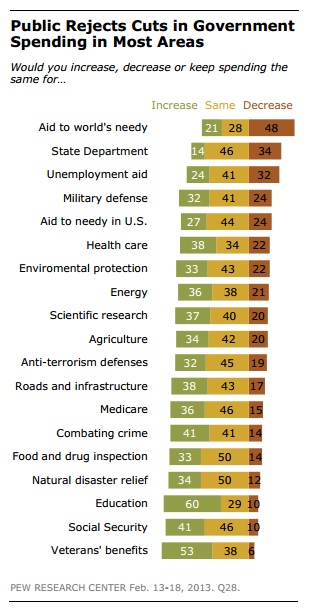

 Danny Vinik