Does a Longer Copyright Term Reduce the Availability of Books?

Georgia law professor Paul Heald’s new working paper suggests so:

By examining what is for sale “on the shelf,” the analysis of this data reveals a striking finding that directly contradicts the under-exploitation theory of copyright: Copyright correlates significantly with the disappearance of works rather than with their availability. Shortly after works are created and proprietized, they tend to disappear from public view only to reappear in significantly increased numbers when they fall into the public domain and lose their owners. For example, more than three times as many new books originally published in the 1850’s are for sale by Amazon than books from the 1950’s, despite the fact that many fewer books were published in the 1850’s.

Copyright law provides artists with a limited monopoly over their work to incentivize the creation of such works. Many copyright owners want the copyright length extended so that they can have a monopoly over both their past works and future works for a longer period (See the Mickey Mouse Curve). But extending the copyright term for past works has no effect on incentives – after all those works have already been created. Congress should have no reason to grandfather in those artistic creations.

In return, lobbyists have argued that increasing the duration of copyright protection will allow owners to profit from their work for a longer period and give them greater incentive to make their works widely accessible. They maintain that extending the copyright term for past works is in the public’s best interest even if it has no effect on incentives.

Heald’s paper pushes back on this argument, finding that works in the public domain are more widely available than those still under copyright protection. He took a random sample of 7000 books on Amazon and matched them up with their year of publication in the Library of Congress. For a couple of technical reasons, he was only able to match 2317 of the 7000. Here’s the distribution of when those books were published:

Copyright Term Extension

All books published before 1923 are currently in the public domain. All those afterward are not. The graph shows that when a book enters the public domain, its availability spikes.

The usual caveats apply here. There’s nothing that suggests with certainty that copyright law causes this distribution. Correlation does not equal causation. The sample size is not huge and Amazon does not represent all retailers. Amazon probably finds it most profitable to license and sell recently published books as well as those that are in the public domain (no license necessary). Books in the middle – not recently published but still copyrighted – are least profitable. There certainly could be many other factors that caused this distribution as well.

Heald continues on to look the availability of songs in the public domain versus songs that are not. That analysis is less convincing thanks to some strange proxies. Nevertheless, Heald’s analysis of Amazon’s book offerings stands. It’s not decisive empirical proof by any means, but at the very least, the next time someone says that a longer copyright term will increase the availability of a work, take it with a grain of salt.
Should We Trust the NSA?

I haven’t posted on Edward Snowden’s leaks on the National Security Agency (NSA), because in general, I’m conflicted over them. I’m very sympathetic to the view that this mass data collection helps protect our national security and has already stopped dozens of terrorist attacks. The fact that we are the center of the digital world and can collect a vast amount of data on foreign citizens is a huge advantage that we’d be insane not to take advantage of. However, with such mass data collection comes the need for very strict rules and strong oversight. We currently have neither.

In particular, the lack of oversight has shocked me. Congressmen who should have been watching carefully over the program didn’t even know about it (the fact that just 47 of a 100 Senators showed up to a classified briefing on the NSA’s surveillance programs AFTER Snowden’s leaks came out is outrageous). The courts rubber stamped warrants without really examining them. This amount of data in the government’s hands has potential for abuse and we don’t have the right protocol in place to ensure that that doesn’t happen.

That’s why today’s story in the Los Angeles Times that Edward Snowden had shown previous signs of disdain towards the NSA and the government’s surveillance scare me. Here’s the important part of the piece:

On the surface, at least, Edward Snowden was hardly unusual at America’s largest and most powerful intelligence agency. A self-taught computer whiz who wanted to travel the world, Snowden seemed a perfect fit for a secretive organization that spies on communications from foreign terrorism suspects.

But in hundreds of online postings dating back a decade, Snowden also denounced “pervasive government secrecy” and criticized America’s “unquestioning obedience towards spooky types.”

At least online, Snowden seemed sardonic, affably geeky and supremely self-assured. In 2006, someone posted to Ars Technica, a website popular with technophiles, about an odd clicking in an Xbox video game console. A response came from “TheTrueHOOHA,” Snowden’s pen name: “NSA’s new surveillance program. That’s the sound of freedom, citizen!”

This is the exact type of person the NSA needs to be careful about hiring. The agency has 30,000 employees and vetting everyone to make sure none would disseminate government secrets is a difficult task, but failure isn’t an option. It can’t relax its standards because it needs more people. If it can’t find enough capable workers that pass background and security checks, then it must find other ways to secure our homeland without them. The NSA must balance hiring an extra analyst who has expressed doubt in America’s power in his past with the risk that that doubt may manifest itself into a larger problem. What are the odds that the extra analyst will save lives versus turning on the NSA and divulging state secrets?

That’s why this article scares me. Snowden clearly demonstrated anti-surveillance and anti-NSA characteristics before joining the agency. He should’ve been flagged as someone at risk of leaking secrets. Maybe the NSA was wary of him – I haven’t seen anything on this though. Maybe it was Booz Allen Hamilton that didn’t vet him properly. Either way, he got through the system and that means we have a problem. If the LA Times can dig up these message board postings in just a few weeks, I expect the US government found them as well. If they did and deemed him worthy of high-level security clearance, why?

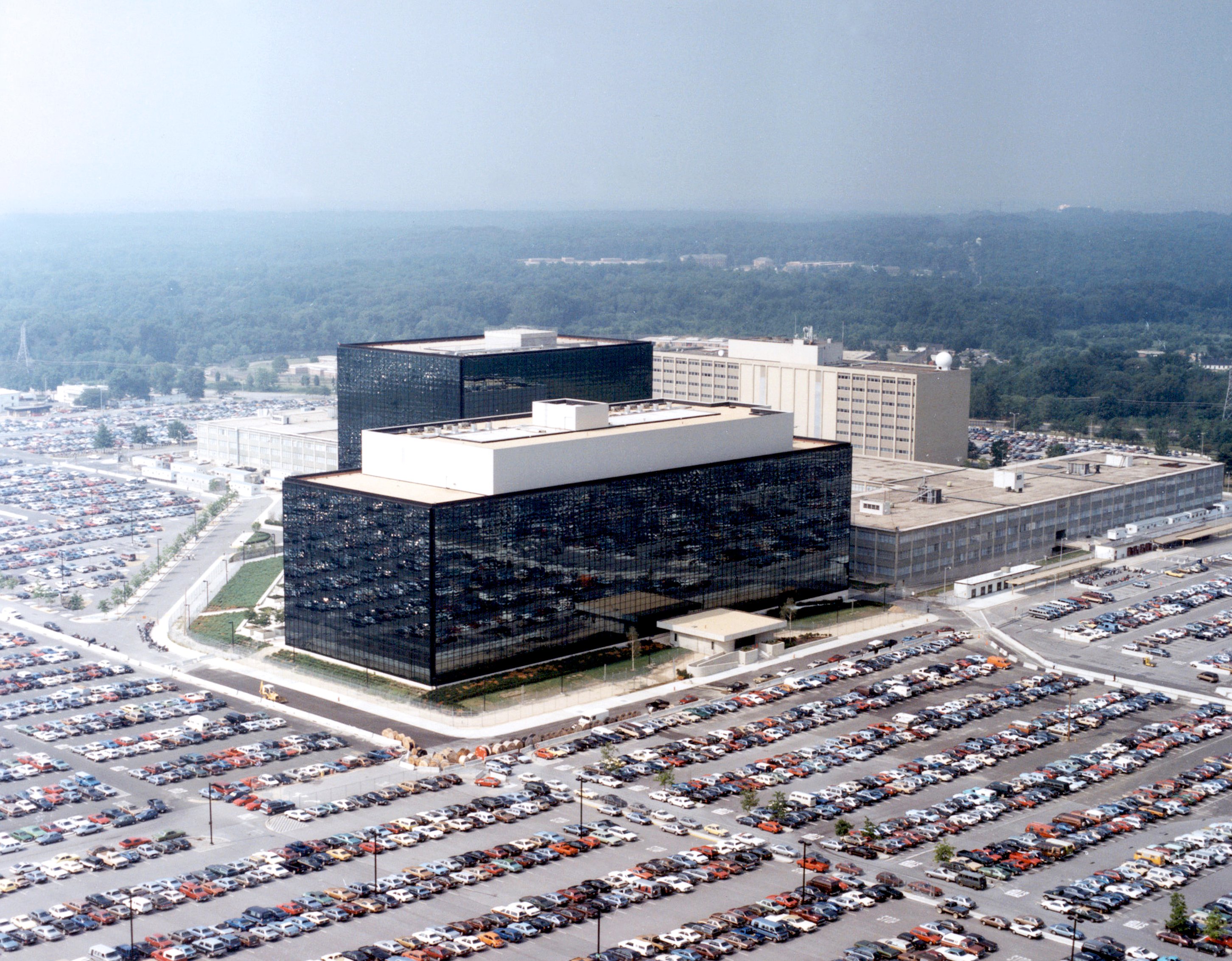
Headquarters of the NSA at Fort Meade, Maryland.

Headquarters of the NSA at Fort Meade, Maryland.

Did the NSA or Booz lower its standards because they were in need of workers? Is this a common characteristic among analysts they hire? Did Snowden offer other evidence that those were past views and he was now committed to the NSA? I’m not sure any answer to those questions will be entirely satisfying, because in the end, he got through the system and leaked the program.

And if the NSA didn’t even know about those online postings, then we need to entirely rethink our security system. If the agency can’t find background information as simple as message board postings, then it undoubtedly missed important evidence regarding the security clearance of dozens, if not hundreds or thousands, of other NSA employees. That’s a much scarier proposition.

All of this just reinforces the need for strict hiring standards, tight protocols and thorough oversight over these programs and over the entire agency. Without them, the potential for abuse and leakage is high. We can’t risk that.

*It’s also why I’m in favor of prosecuting Snowden. As much as his leaks have demonstrated flaws in our surveillance system, we also cannot incentivize future potential leakers to do the same. Snowden made a judgment call that releasing these classified documents would reveal a program that had flaws and deserved to be out in the open while not putting national security at risk. Given that the Guardian and Washington Post only published four of the 41 slides that he gave them, his judgment does not seem to have been good enough. We don’t know what’s in those other 37 slides, but it may be information related to national security that neither organization felt comfortable releasing. It just goes to show the huge risk involved in leaking. What if either the Guardian or the Post had published the other slides and harmed national security? If we do not prosecute Snowden, we are telling future leakers that it is acceptable for them to make that judgment call. That puts a huge amount of responsibility on the leaker – responsibility that I’m nowhere near comfortable giving him.

(h/t Kevin Drum)

Why Isn’t Securing Our Border Part of the Immigration Debate?

The main news on immigration reform today is a compromise on border security that spends an additional $30 billion on security to double the number of border patrol agents, increase surveillance and build a 700 mile fence at the border. The Corker-Hoeven amendment is supposed to give Republican Senators political cover to demonstrate to their constituents that they are committed to border security. At the same time, it doesn’t require that certain security standards be met before allowing illegal immigrants to begin applying for citizenship, as the failed Cornyn amendment would have done. Josh Barro outlined the agreement nicely:

Democrats agreed to spend as much money on border security as Republicans wanted (some $30 billion over 10 years) so long as Republicans agreed that there wouldn’t be consequences if the security doesn’t work.

Barro continues on to say that Republicans made out pretty well with this deal:

And this deal gets Republicans way more in added border security spending than they would have gotten under Cornyn’s amendment. If they think security measures are likely to work, they should be pleased about that, even if there isn’t a consequence for failure.

This is part of the entire immigration debate that has been lost on me. Who exactly doesn’t want a secure border? Cornyn’s amendment was clearly a poison pill that would have killed the bill. The reason though had nothing to do with border security and everything to do with the “triggers.” The amendment could have been used to effectively prevent illegal immigrants from becoming citizens, even with the path-to-citizenship. If those “triggers” aren’t met, then they can’t start the citizenship process. That’s why Democrats had such strong objections to it.

But no Democrat has argued against strengthening our border. This hasn’t even been part of the debate! The CBO’s study on the bill found that it would reduce illegal immigration by 25%*. That’s certainly better than the status quo, but shouldn’t we also be focusing on ways to make that number 50% or 75%? If we can’t find a way to meaningfully reduce illegal immigration, we’re going to continually find ourselves needing immigration reform.

But no one is talking about ways to secure our border. We’re just throwing money at the problem and hoping beefed up security and a big fence will work. As Matt Yglesias notes today, a huge amount of illegal immigrants are people who overstayed their visas. We need better within country border control to ensure that this doesn’t happen. Jared Bernstein also argues for a stronger employment verification system. There are smart proposals for how to stem the flow of illegal immigrants (Yglesias also argues for no cap on guest workers), but we aren’t even having this discussion. Instead, it’s all politics and money. What’s new in D.C.

*Where they get this number is unclear. It’s likely just a general guesstimate, but I also haven’t seen any other studies on how much the bill would reduce illegal immigration. Shouldn’t that be a big part of the conversation?