I haven’t posted on Edward Snowden’s leaks on the National Security Agency (NSA), because in general, I’m conflicted over them. I’m very sympathetic to the view that this mass data collection helps protect our national security and has already stopped dozens of terrorist attacks. The fact that we are the center of the digital world and can collect a vast amount of data on foreign citizens is a huge advantage that we’d be insane not to take advantage of. However, with such mass data collection comes the need for very strict rules and strong oversight. We currently have neither.
In particular, the lack of oversight has shocked me. Congressmen who should have been watching carefully over the program didn’t even know about it (the fact that just 47 of a 100 Senators showed up to a classified briefing on the NSA’s surveillance programs AFTER Snowden’s leaks came out is outrageous). The courts rubber stamped warrants without really examining them. This amount of data in the government’s hands has potential for abuse and we don’t have the right protocol in place to ensure that that doesn’t happen.
That’s why today’s story in the Los Angeles Times that Edward Snowden had shown previous signs of disdain towards the NSA and the government’s surveillance scare me. Here’s the important part of the piece:
On the surface, at least, Edward Snowden was hardly unusual at America’s largest and most powerful intelligence agency. A self-taught computer whiz who wanted to travel the world, Snowden seemed a perfect fit for a secretive organization that spies on communications from foreign terrorism suspects.
But in hundreds of online postings dating back a decade, Snowden also denounced “pervasive government secrecy” and criticized America’s “unquestioning obedience towards spooky types.”
At least online, Snowden seemed sardonic, affably geeky and supremely self-assured. In 2006, someone posted to Ars Technica, a website popular with technophiles, about an odd clicking in an Xbox video game console. A response came from “TheTrueHOOHA,” Snowden’s pen name: “NSA’s new surveillance program. That’s the sound of freedom, citizen!”
This is the exact type of person the NSA needs to be careful about hiring. The agency has 30,000 employees and vetting everyone to make sure none would disseminate government secrets is a difficult task, but failure isn’t an option. It can’t relax its standards because it needs more people. If it can’t find enough capable workers that pass background and security checks, then it must find other ways to secure our homeland without them. The NSA must balance hiring an extra analyst who has expressed doubt in America’s power in his past with the risk that that doubt may manifest itself into a larger problem. What are the odds that the extra analyst will save lives versus turning on the NSA and divulging state secrets?
That’s why this article scares me. Snowden clearly demonstrated anti-surveillance and anti-NSA characteristics before joining the agency. He should’ve been flagged as someone at risk of leaking secrets. Maybe the NSA was wary of him – I haven’t seen anything on this though. Maybe it was Booz Allen Hamilton that didn’t vet him properly. Either way, he got through the system and that means we have a problem. If the LA Times can dig up these message board postings in just a few weeks, I expect the US government found them as well. If they did and deemed him worthy of high-level security clearance, why?
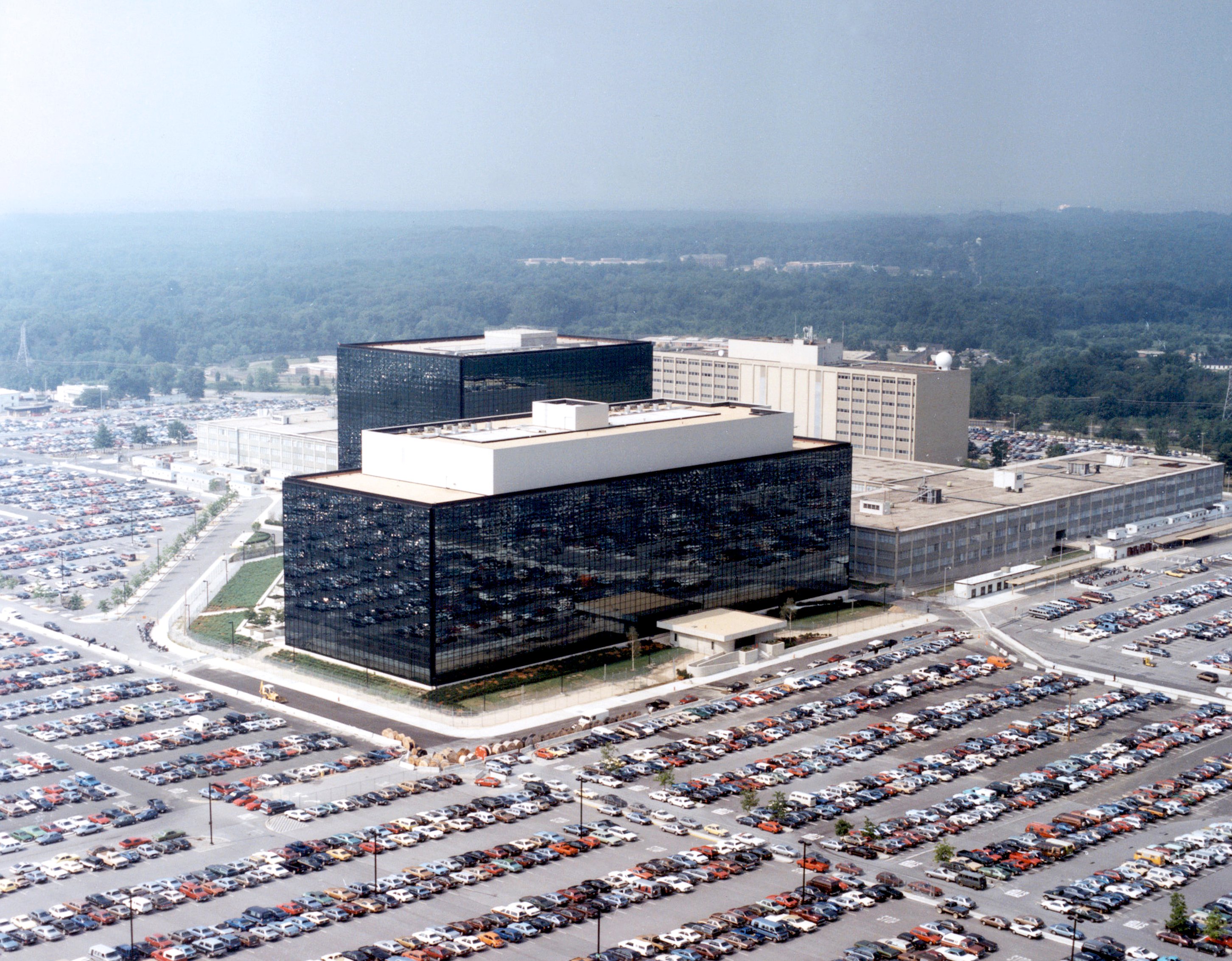
Headquarters of the NSA at Fort Meade, Maryland.
Did the NSA or Booz lower its standards because they were in need of workers? Is this a common characteristic among analysts they hire? Did Snowden offer other evidence that those were past views and he was now committed to the NSA? I’m not sure any answer to those questions will be entirely satisfying, because in the end, he got through the system and leaked the program.
And if the NSA didn’t even know about those online postings, then we need to entirely rethink our security system. If the agency can’t find background information as simple as message board postings, then it undoubtedly missed important evidence regarding the security clearance of dozens, if not hundreds or thousands, of other NSA employees. That’s a much scarier proposition.
All of this just reinforces the need for strict hiring standards, tight protocols and thorough oversight over these programs and over the entire agency. Without them, the potential for abuse and leakage is high. We can’t risk that.
*It’s also why I’m in favor of prosecuting Snowden. As much as his leaks have demonstrated flaws in our surveillance system, we also cannot incentivize future potential leakers to do the same. Snowden made a judgment call that releasing these classified documents would reveal a program that had flaws and deserved to be out in the open while not putting national security at risk. Given that the Guardian and Washington Post only published four of the 41 slides that he gave them, his judgment does not seem to have been good enough. We don’t know what’s in those other 37 slides, but it may be information related to national security that neither organization felt comfortable releasing. It just goes to show the huge risk involved in leaking. What if either the Guardian or the Post had published the other slides and harmed national security? If we do not prosecute Snowden, we are telling future leakers that it is acceptable for them to make that judgment call. That puts a huge amount of responsibility on the leaker – responsibility that I’m nowhere near comfortable giving him.
(h/t Kevin Drum)

 Danny Vinik