I am very confused with MLB scheduling. I can’t figure out how any of it makes sense 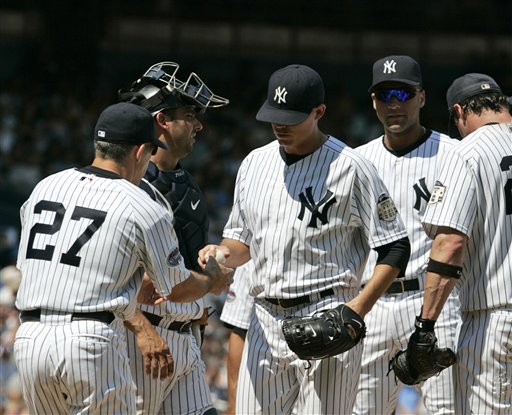 and can’t see how it could possibly be fair, especially with Interleague games. The Red Sox, for instance, face NL teams that are a combined 27 games over .500 while the Yankees face teams a combined 20 games under .500. How can that possibly be fair? Or how about the fact that the teams withthe four hardest strength of schedules are all from the American League East, but the Yankees are not one of them (they are 13th). The teams with the 11 highest strength of schedules are all American League teams and the teams withthe 11 lowest strength of schedules are all National League teams. I know the AL is beating up on the NL, but is that what creates this ridiculous difference. Even crazier, of those 11 NLteams with easy schedules, only 6 have records above .500 while of those 11 AL teams with tough schedules, only 4 have records below .500. Thus, the teams with easy schedules are losing and the teams with tough schedules are winning. Wouldn’t that suggest that those 11 AL teams are an incredibly amount better than those NL teams? Amongst those 11 NL teams are all three NL division leaders, the Phillies, Cubs, and Diamondbacks. Are we really supposed to expect the NL to contend with the AL? Continue reading “The Unfairness of Interleague Play”
Tag Baseball
MLB All Star Starters
The Major League Baseball season is nearing its midpoint and with that comes the 2008 All Star game in Yankee Stadium. With fans voting for the All Star starters, the game many times turns into a popularity contest with deserving players not voted in as starters. Here are those American League players who should be starting at the 2008 All Star game:
Designated Hitter: I find it funny this year that there a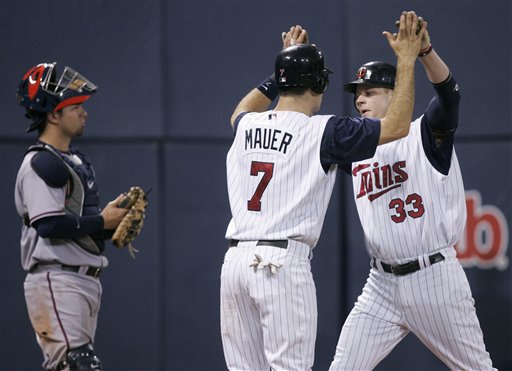 re no designated hitters have good years. I will give the nod to David Ortiz (though he is injured) with his 13 home runs and 43 RBI, but his .252 batting average makes him a non-ideal candidate. Of the 6 players qualifying for DH, only Hideki Matsui has a batting average above .265, but Matsui has only 7 home runs and 34 RBI, hardly an All Star caliber season. No DH is slugging above .500, so with the lack of talent at DH this year, I select Ortiz as he is the most balanced player amongst designated hitters.
Catcher: There aren’t very many candidates in the AL for starting catcher, but it has to go to someone. With a .332 batting average and .417 on base percentage, Joe Mauer is my choice to start at catcher. He has only 2 home runs and 27 RBI, but no other American League catcher stands out. Mauer has made only 2 errors at catcher all season and has thrown out 34% of runners. Continue reading “MLB All Star Starters”
Steroids: The Aftermath
As I look at the statistics in MLB this year and compare them to certain stats over the past couple seasons, the effect of steroids (or lack of steroids) is clearly visible. In 2005, the average number of home runs per American League team was 182 while this year the average numb er of home runs per team is 149 (adjusted for 162 games). That is a drop of 33 home runs per team, nearly a 500 home run drop in the entire league.
Whenever I have a simple chat with someone about the effect of steroids in baseball, the same point is made consistently: Steroids were more prevalent amongst pitchers than batters. Well that may be true, but the stats clearly don’t support that supposition. Over the past couple seasons, pitching has dramatically increased while hitting is in decline. For instance, the average team ERA in 2006 was 4.56 in the AL, while in 2008, the average team ERA is down to 4.16. Each team is giving up nearly 1/2 a run less per game, a total of 64.2 less runs per team for the entire season. If there were more pitchers using steroids than hitters, wouldn’t batting increase as players stopped using steroids? The fact that the opposite has happened, that pitching has increased, indicates that more batters used steroids than pitchers. Having said that, it could also indicate that steroids help batters more than pitchers and not that more batters used steroids more than pitchers. Continue reading “Steroids: The Aftermath”
 Danny Vinik