- Don’t Get Your Hopes Up About a Budget Deal (Josh Barro at Business Insider)
. - Why We Need a HealthCare.Gov Witchhunt (John Dickerson at Slate)
. - Do Obamacare’s “Three Mores” Spell Long-Term Failure? (Austin Frakt at The Incidental Economist)
. - In Fed and Out, Many Think Inflation Helps (Binyamin Appelbaum at NYT)
Author Danny Vinik
Ted Cruz’s Iowa Speech Reveals the Limits of the Grassroots
On Friday, Sen. Ted Cruz (R-Tx.) headlined Iowa’s annual GOP fundraising dinner, speaking for 45 minutes without a teleprompter or notes. It was Cruz’s third trip to Iowa, likely in preparation for a 2016 presidential run.
Much of his speech was centered on Obamacare and the government shutdown, which he still believes was a success despite receiving no concessions from President Obama and angering many people in his party.
“One of the things we accomplished in the fight over Obamacare,” he said. “is we elevated the national debate over what a disaster, what a train wreck, how much Obamacare is hurting millions of Americans across this country.”
That’s not actually true. The shutdown overshadowed the launch of the government exchanges, which have had massive issues during the first couple of weeks and have seen only marginal improvements since. Once the shutdown finished and debt ceiling deal was complete, the media’s attention turned to Obamacare and the administration has been on the defensive since. Cruz’s strategy provided a distraction from Obamacare during what may be its darkest hour. That’s not exactly elevating “the national debate over what a disaster” it is. In fact, it’s the opposite.
But Cruz is right about one thing: the grassroots support around the country is impacting American politics.
“For everyone who talks about wanting to win elections in 2014 — particularly an off-year, nonpresidential year — nothing, nothing, nothing,nothing matters more than an energized and active and vocal grassroots America,” he said. “I’m convinced we’re facing a new paradigm in politics. It is the rise of the grassroots.”
At the fundraiser, Cruz pointed out five issues that the Tea Party base has successfully influenced:
- Gun control and the Manchin-Toomey Bill
- Sen. Rand Paul’s (R-Ky.) filibuster over drone policy
- Comprehensive immigration reform
- Bipartisan disagreement over Obama’s Syria strategy
- The government shutdown
Looking at each one of those issues, it’s clear that Cruz has a point. Despite most Americans being in favor of universal background checks, pressure from the small but powerful gun-rights groups (most of whom are Tea Partiers) convinced lawmakers to oppose it. Paul’s filibuster made national headlines and provoked a new conversation over America’s drone policy. Immigration reform is also favored by the majority of Americans, including citizenship for the 11 million undocumented immigrants currently residing in the United States, but the odds of any legislation passing look slim thanks to the Tea Party. Obama’s decision to ask Congress for approval to attack Syria may not have resulted from grassroots anger, but the slim chances he had of receiving a force authorization were certainly a result of bipartisan opposition to his proposals. Finally, the government shutdown was the direct result of the Tea Party’s fury at Obamacare, forcing GOP lawmakers to go along or be labeled a RINO.
In each situation, the grassroots Tea Party base, despite representing less than a quarter of the electorate, had a significant impact on the policy debate. The Tea Party has earned this power by developing a vocal, angry foundation that it can mobilize to have an outsized effect on elections. Cruz is right. The grassroots truly is powerful.
However, what the junior senator has not grasped is that there is a limit to this power. In the end, the Tea Party still represents a small part of the electorate and their scorched-earth tactics have earned the derision of much of the nation. The problem with having enough power to block popular legislation is that you make a number of enemies by doing so. Cruz & Co. make even more enemies when they choose tactics that have no chance of success.
In the other four issues he cites, the conservative base achieved their goals. They scuttled universal background checks, immigration reform and a strike on Syria and brought drone policy to national attention. The government shutdown was different. It was bound to fail from the beginning, but Cruz didn’t care. Now, the Republican Party has its lowest favorability ratings of all time and Cruz’s favorables with non-Tea Partiers have plummeted. He’s solidified his position as cult hero amongst the Tea Party, but at the expense of alienating the Republican establishment, crowding out media coverage of HealthCare.gov’s struggles and damaging his credibility as a strategic thinker. Cruz is right that the grassroots has become a powerful force in politics, but the government shutdown revealed the limits of that power. Likewise, Cruz has become an imposing figure in the Senate, but the past month demonstrated that he faces limitations as well.
Will Rand Paul Filibuster Janet Yellen?
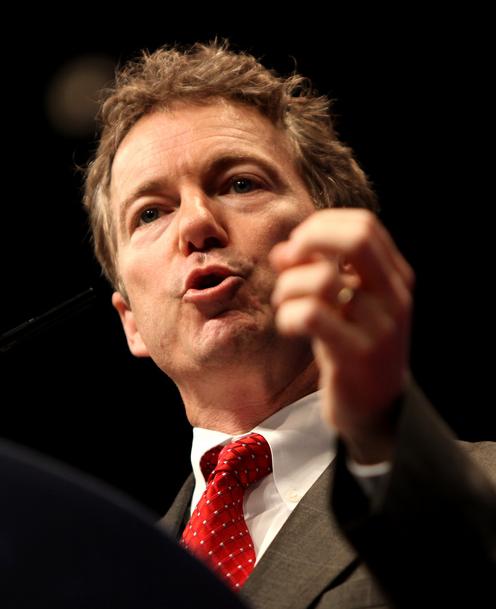
Will Paul filibuster Yellen?
Sen. Rand Paul (R-Ky.) announced today that he plans to place a “hold” on Fed Chair nominee Janet Yellen. By doing so, Paul sets himself up to perform another filibuster as he did against the nomination of CIA head John Brennan last February. It’s not clear at all that Paul will filibuster Yellen if Harry Reid ignores his “hold” and proceeds with the nomination. Paul’s demanding a vote on his bill to audit the Fed, something that his father pushed for years.
A filibuster will be another negative mark against the Republican party as Americans believe more and more that the party is unable to govern. This will lead many in the party to push him to allow her nomination to go forward. If the establishment comes out strongly in favor of allowing her to proceed, Paul will have a tough decision to make.
One argument against a filibuster is that Janet Yellen would be the first ever women chairman of the Fed and filibustering her would look terrible. It’s conventional wisdom that the Republican Party has a gender problem. Women don’t like the GOP. If the party cannot find a way to reverse that description, it will have a hard time taking back the presidency in 2016. That means it will have to nominate a candidate who has a strong track record on gender issues, or at least not a bad one. By filibuster Yellen, Paul reduces his chances of being that person. Not just will Yellen be the first woman to head the Fed, she is unquestionably qualified, has a huge amount of experience and has a terrific track record. Paul does not doubt any of that, of course. He simply wants a vote on his bill. But that doesn’t matter. What matters is the optics of his actions and those optics aren’t good. He’ll be filibustering the most-qualified Fed Chair nominee in recent history, who also happens to be the first woman nominee.
Except that doesn’t matter. Few issues affect a general election. A filibuster against a Fed nominee three years earlier will almost certainly be meaningless. Nearly half the country doesn’t know who Yellen is. That number will certainly rise, but most people vastly underrate rate the importance of the Federal Reserve. They don’t care who runs the place.
On the other hand, a filibuster offers Paul a chance to keep pace in the race for Tea Party support. The Tea Party is having a collective orgy over Sen. Ted Cruz’s (R-Tx.) filibuster* and government shutdown. Paul smartly avoided that fight and thus hasn’t infuriated the establishment, but it did allow Cruz to seize control of the right wing. Paul needs to strike back and this offers him a rare opportunity where the issue before the Senate relates directly to a topic he’s passionate about. He’s doesn’t get many chances where he can draw national attention to audit the Fed. Like drone strikes, this is an issue where Paul is the leader. It’s perfectly timed for him to demonstrate to the Tea Party that he is equally as defiant as Cruz is and will fight tooth-and-nail against the Obama administration.
Cruz earned Tea Party support for his government shutdown antics, but lost the establishment. Rand Paul still has that support, but he has to compete with Cruz in the primary. If he can earn an equal support from the Tea Party as Cruz does, it will set him up to be the senate leader for the Republican nomination. But if the establishment becomes enraged at Paul for filibustering Yellen, it will put him in the same position as Cruz and be a boon for the Republican governors eying the presidency. Paul has a tough decision to make.
*I know it was technically not a filibuster. Whatever.
 Danny Vinik