Ignore Big Marijuana

Byron Tau penned a piece for Politico over the weekend about a new opponent of marijuana legalization: Big Marijuana. Yup, you read that correctly. Big Marijuana refers to the industry of medical marijuana growers that exist in states around the country. These growers partake in a risky business, since growing and selling weed is still federally illegal even if it’s legal in various states. That means that the Feds could raid a dispensary at any time. It’s a constant risk. So on a national scale, medical marijuana growers and supporters of full legalization are unified in their support for federal legalization. On a state level though, the two groups are starting to butt heads. Here’s Tau (emphasis mine):

Medical marijuana is a billion-dollar industry — legal in 18 states, including California, Nevada, Oregon and Maine — and like any entrenched business, it’s fighting to keep what it has and shut out competitors. Dispensary owners, trade associations and groups representing the industry are deeply concerned — and in some cases actively fighting — ballot initiatives and legislation that could wreck their business model.

From the point of view of dispensary owners, legalization laws — depending on how they’re written — can have little immediate upside and offer plenty of reasons for concern. For one, their businesses — still illegal under federal law — benefit from exclusive monopolies on the right to sell legal pot, but state measures still don’t end the risks of an FBI raid or Internal Revenue Service audit. Meanwhile, those same federal laws that prohibit growing, selling and using keep pot prices high.

I’m in favor of marijuana legalization, but there are also some decent arguments against it. David Frum has written a lot in opposition to legalization and while I don’t find his arguments convincing enough to favor our current system, they also are not worth dismissing. What is worth dismissing is any argument from Big Marijuana against legalization.

This is rent-seeking in its purest form. Medical marijuana growers love their monopoly in the industry and don’t want to see competitors eat away at their profits. They also feel like they’ve taken on excessive risk over the past years in selling a federally illegal product and deserve for their industry to have stricter barriers to entry to compensate themselves for their risk-taking. This is entirely wrong. The compensation they received from their risk taking was the monopoly power they enjoyed and the profits that came with it.

So now they’re joining forces with the anti-pot crowd to oppose legislation that would make the drug legal in Maine and other states. In Colorado, the ballot measure that legalized weed this past November included a clause that gave medical marijuana dispensaries the right to receive a license to convert their shops into recreational stores before anyone else entered the market. This is also absurd. Medical marijuana dispensaries already have the supply lines and business experience that new entrants don’t have. They don’t need any extra protection from the state.

I hope people don’t take Big Marijuana’s arguments seriously. Like any other trade group, they are simply looking out for their bottom line and not for the interests of the general public. If you want to find reasons to oppose legalization, go read Frum and other writers on it. But please ignore Big Marijuana.

Ignoring the Social Cost of Carbon is Anti-Capitalistic

The House is currently taking up a bill called the Energy Consumers Relief Act, which looks to put stricter rules on the Environmental Protection Agency (EPA). The bill requires the EPA to report to Congress on any rule that has costs greater than a $1 billion. It also allows the Department of Energy to veto any rule that it believes will cause “significant adverse effects to the economy.” Of course, the vague wording gives the DOE the ability to vacate nearly any rule it wants.

But I want to focus on two similar amendments to it. The first comes from Rep. Tim Murphy (R-PA) and it would prevent the EPA from considering the social cost of carbon (SCC) when it creates rules that have costs greater than $1 billion. The second amendment, from Reps. Duncan Hunter (R-CA) and John Culberson (R-TX), would only allow the agency to take into account the SCC if it put out a separate rule finalizing what the cost would be.

Preventing the EPA to consider the SCC is absurd. Pollution is the quintessential example of a negative externality in every economics class. Basically, companies emit huge amounts of carbon and other chemicals into the air, harming the environment and hurting society, but don’t have to pay for those costs. Since no one “owns the air,” companies can offload pollutants into it without hurting their bottom line. That’s where the EPA comes in. They set regulations to limit this behavior and force companies to pay for the pollutants they emit through regulatory compliance. The SCC is a major way of doing so. It estimates the social costs to society of releasing a ton of carbon dioxide into the air. In May, the Office of Management and Budget (OMB) increased the SCC from $21/ton to $35. That’s a big change.

The SCC takes into account pollution.

The SCC increases the estimated benefits of regulation.

The way this works is that when the EPA creates a rule that will, for example, reduce carbon emissions by 100,000 tons, the social benefit of that regulation would be $3.5 million (100,000 tons*$35/ton). That would then be compared to the costs of the regulation. When the SCC is higher, the total benefits and net benefits will be higher as well. Companies want the SCC to be low – the lower it is, the less chance the EPA’s proposed rules will produce net benefits and the lower the chance the industry will have to comply with them. But economists love the SCC. It internalizes the negative externality of carbon pollution, creating more efficient, fair markets.

But Reps. Murphy, Hunter and Culberson aren’t buying it. The SCC is not an easy number to determine and the EPA and other agencies have tried to estimate it for a while. That means figuring out a final number, such as Reps. Hunter and Culberson want the agency to do, is challenging and will take a while. In the meantime, we shouldn’t just ignore the SCC because we don’t have a final answer. We should use the best numbers we have while continuing to research climate change and develop a more perfect metric. Rep. Murphy, on the other hand, doesn’t even care if the EPA comes up with a final number. He wants to ban the agency from using it altogether (for rules with costs greater than $1 billion).

The OMB’s decision to increase the SCC infuriated conservatives, but the correct response is not to prevent the EPA from using it. If it wants to develop a more accurate number, then increase the agency’s funding so that it can do more research on the social costs of carbon. But these amendments attempt to fix the problem by ignoring the SCC altogether. They do not promote free markets. In fact, they do the opposite. By preventing the EPA from internalizing the negative externality, they allow companies to pollute the environment without facing the costs.

For a party so committed to laissez-faire economics, that’s incredibly anti-capitalistic.

What If Wal-Mart Is Bluffing

My post yesterday afternoon focused on why D.C. Mayor Vincent Gray should veto the living wage bill that the D.C. council passed a few weeks ago. As part of that analysis, I assumed that Wal-Mart will follow through on its threats to scrap plans to build six stores in the region if Gray signs the bill into law. I still believe that assumption is rock solid. As I noted in that article, if Mayor Gray signs the bill and Wal-Mart builds the stores anyways, it will set the precedent for every other city in America to enact similar laws. Wal-Mart could soon be paying a higher minimum wage than all of its competitors. So, I’m fairly confident that my assumption is correct.

But what if it’s not? What if Wal-Mart is bluffing? Should Mayor Gray veto the bill still?

The answer is still yes.

Under this assumption, Wal-Mart builds its stores no matter what, except in one scenario, it is paying significantly higher wages to its employees. In the current economy with unemployment high, the new stores would add 1,800 much-needed jobs to the District. Since we’re still not at full employment, the new jobs won’t impact wages for other firms in the area. That means Wal-Mart would be paying its workers at least $12.50 an hour while competing firms can pay them just $8.25/hour. The companies would be competing in the same market but forced to face different prices for labor. This gives smaller stores a big advantage over the giant retailer. Less efficient shops can compete with Wal-Mart thanks purely to favorable city policies.

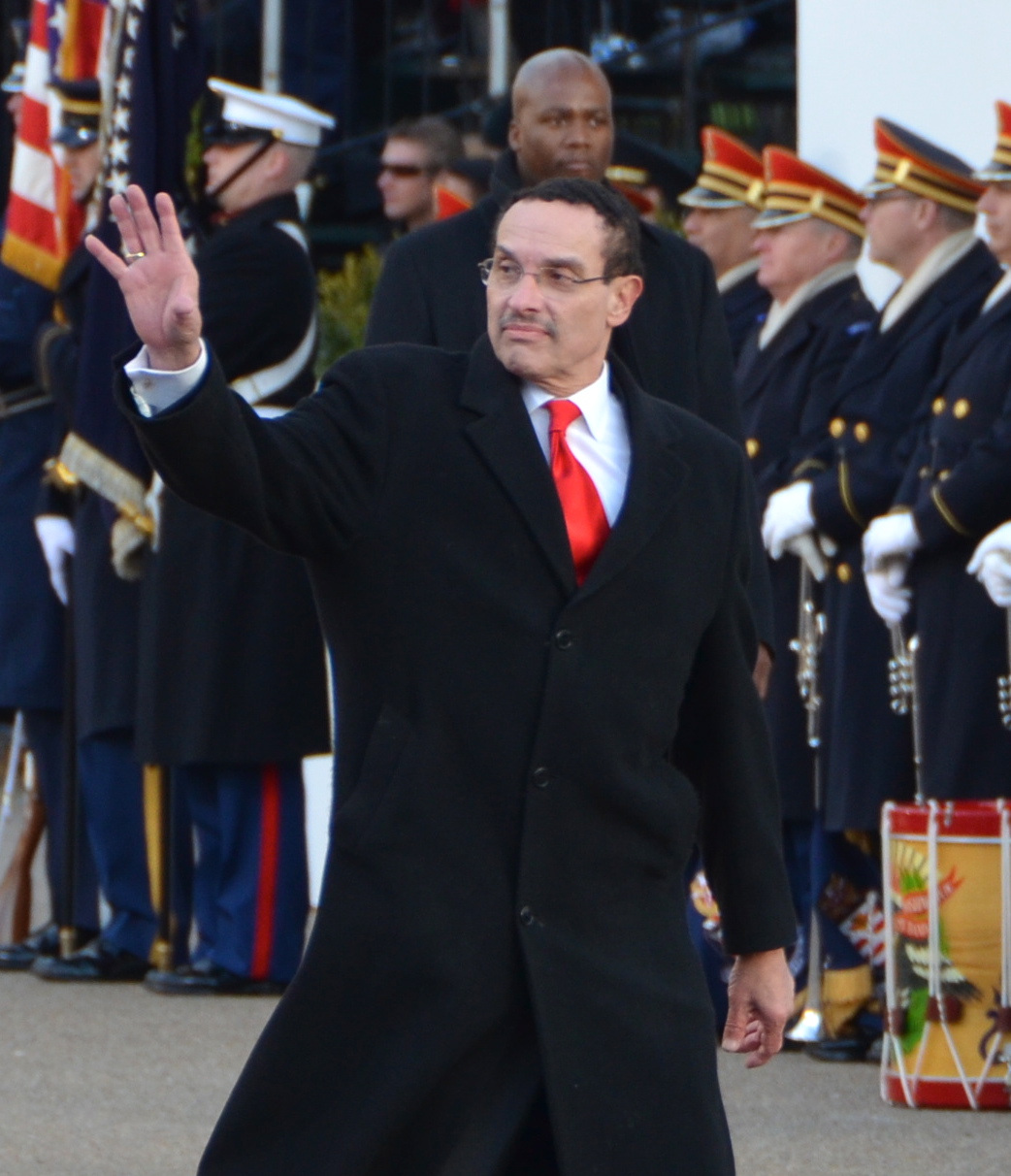
D.C. Mayor Vincent Gray should veto the living wage bill.

D.C. Mayor Vincent Gray.

As we slowly get back to full employment, the living wage bill would start to affect other firms’ wages. At full employment, workers have more bargaining power and would want to work for Wal-Mart with its higher pay. This would force competing firms to increase their own wages to stay competitive in the labor market. When there isn’t excess supply of labor (as there is now), workers have more bargaining power. And when one firm is forced to offer wages at a 50% premium, workers have a lot more bargaining power.

This is fundamentally against free markets.

Wal-Mart would undoubtedly pass on some of the increased labor costs to consumers in the form of higher prices in the D.C. area. The same would be true at competing stores when they eventually face higher labor costs themselves. The 1,800 Wal-Mart employees would all earn more at the expense of consumers. And the market would still be distorted: Wal-Mart would still be paying higher labor costs and less efficient firms will be able to compete with it.

If the city believes that Wal-Mart’s entrance into the region will cause negative side effects (externalities) to occur, it can levy a tax against the firm and distribute the revenue to compensate those harmed. But distorting the labor market is not a smart way to correct the externality. The living wage bill does not compensate those who are harmed by Wal-Mart’s arrival, but instead helps the new employees of the company.

I also noted in yesterday’s article that D.C. council member Vincent Orange argued that Wal-Mart’s low wages forced the city to pay more in social services. But the same is true of any other minimum wage job in the area. If minimum wage jobs at Wal-Mart increase the amount D.C. pays in SNAP benefits (for instance), then every other minimum wage job does so as well. If the  council member is looking to help the city’s finances by enabling people to rely less on the government, it should raise the minimum wage for everyone. Doing so for Wal-Mart hurts the company, but doesn’t address the underlying problem.

So, no matter whether Mayor Gray believes Wal-Mart is bluffing or not, he should veto the bill.

It simply doesn’t make sense to sign it.